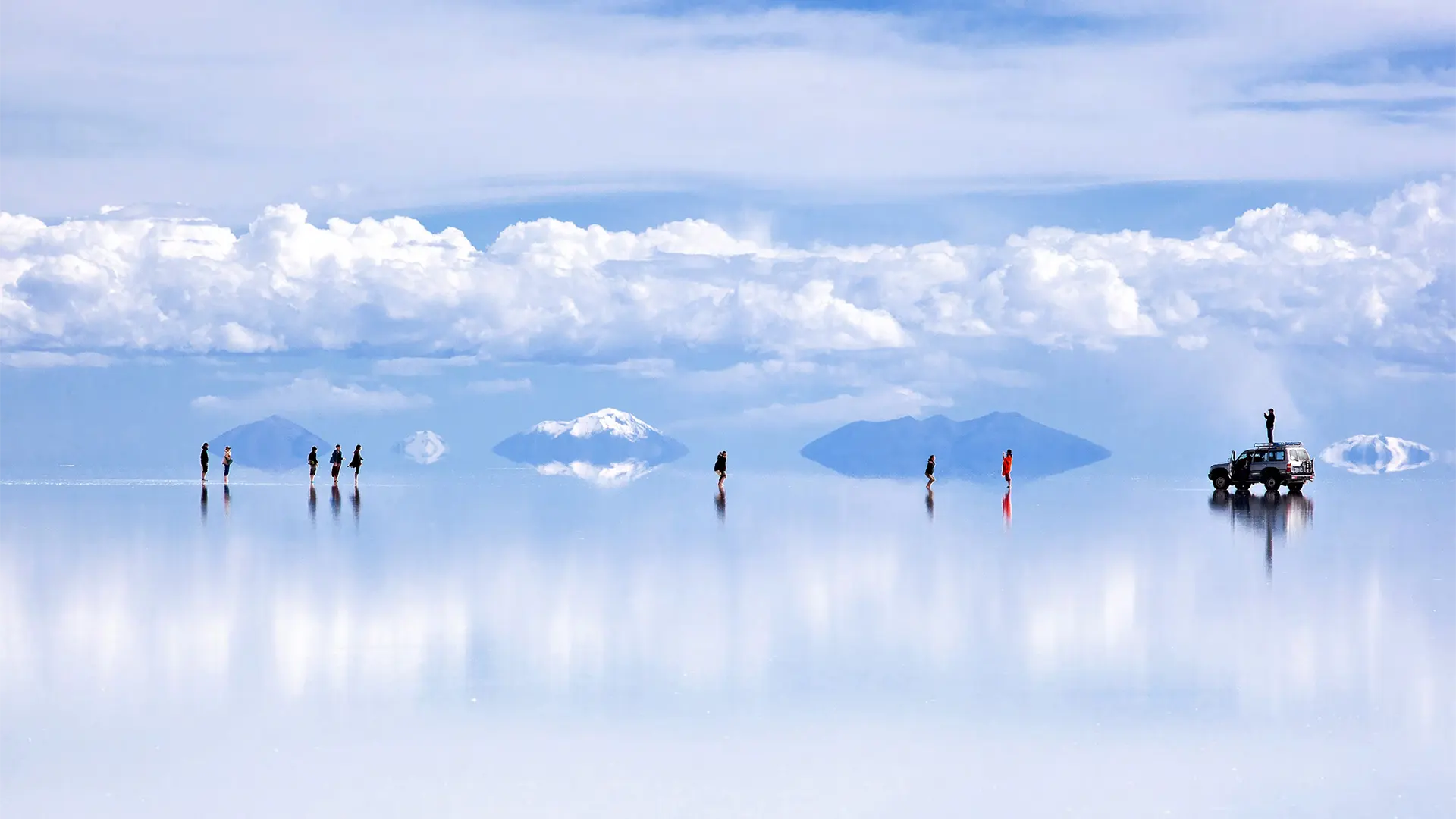
Salar de Uyuni, situated in the highlands of Bolivia’s Altiplano, presents a truly surreal landscape that seems to bring your wildest imaginations to life. Often regarded as one of the most otherworldly destinations on the planet, this vast salt flat captivates visitors with its optical illusions, pristine reflective surfaces, and ethereal charm.
What Is the Salar de Uyuni?
The Salar de Uyuni is the largest salt flat in the world, covering an area of about 10,000 square kilometers. Located at an altitude of 3,650 meters above sea level, it’s not only expansive but also sits higher than most mountain ranges on Earth.
How Did It Form?
Around 40,000 years ago, a giant lake once dominated this region. As time passed, the lake evaporated, leaving behind thick layers of salt crust, which now cover the landscape, dotted with pools of brine. This natural wonder now serves as a major site for salt mining and lithium extraction.
Where Is Salar de Uyuni?
This stunning natural landmark is located in the southwest of Bolivia, roughly 540 kilometers from La Paz, and near the border with Argentina. The town of Uyuni is the main gateway for tourists heading to the salt flats.
Getting to Uyuni
Despite its remote location, Uyuni is relatively easy to reach from major Bolivian cities and neighboring countries. Here are the primary routes:
From La Paz to Uyuni
- Daily overnight buses are available from companies like Panasur and Todo Turismo.
- The journey typically takes 9 to 10 hours, costing around 90 BOB (~$13 USD).
- Buses are generally semi-cama or cama (reclining seats), making the overnight trip more comfortable.
From Puno, Peru to Uyuni
- Puno to Copacabana: A 3–4 hour bus ride.
- Copacabana to La Paz: Another 4–5 hours by bus.
- La Paz to Uyuni: 10–12 hours overnight.
Tip: Take time to explore La Paz before heading to Uyuni.
From Argentina (Salta or Jujuy) to Uyuni
- Bus to La Quiaca (7–8 hours from Salta, 5–6 hours from Jujuy).
- Walk across the border to Villazón, Bolivia.
- Bus to Tupiza (2–3 hours) and then to Uyuni (6–7 hours).
From Chile (San Pedro de Atacama) to Uyuni
Buses and tours are available via the Ollagüe border crossing. Direct buses take around 9 hours, costing about $20 USD.
For a more immersive experience, many travelers choose to book a multi-day tour from San Pedro to Uyuni, often arranged by agencies like SALUXE TRAVEL.
Where to Stay When Visiting Salar de Uyuni
Uyuni offers various accommodation options, from budget hostels to boutique hotels. For a truly unique and memorable stay, consider booking a salt hotel, where everything from the walls to the furniture is made from salt blocks.
Recommended Salt Hotels:
- Palacio de Sal: The first salt hotel, offering luxury amenities.
- Hotel de Sal Luna Salada: Known for its panoramic views and regional decor.
Best Time to Visit Salar de Uyuni
| Season | Highlights | Ideal For |
|---|---|---|
| Dry Season (April–October) | Crisp salt surfaces, clear skies, and iconic photo opportunities. | Creative photography and 4×4 adventures |
| Wet Season (December–March) | Reflective mirror effect from rain, stunning sunsets, and illusions. | Photography, romantic travel, surreal experiences |
| Transitional (November & March) | Combination of dry and wet conditions. Unpredictable but visually striking. | Photographers and explorers |
Types of Iconic Photos You Can Capture
1. Forced Perspective Photography
During the dry months, you can create visual tricks like standing in a friend’s hand or escaping from a Pringles can. These fun shots are particularly popular from April to October.
2. Mirror Reflection Photos
In the rainy season, the salt flat becomes a perfect mirror, reflecting the sky. If you time it right, you can capture the illusion of the horizon disappearing entirely.
3. Night Sky Reflections
From March to May, night photography is at its best. With clear skies and no light pollution, the stars appear twice—once above and once mirrored on the salt flat, creating a galactic infinity.
What to Bring When You Visit Salar de Uyuni
Proper preparation for your trip to the Salar de Uyuni is essential for a safe and enjoyable experience. Due to its high altitude, extreme temperatures, and remote location, bringing the right gear will ensure your comfort.
Clothing Essentials
- Layered clothing: Mornings and evenings are chilly, while midday can feel warm due to the intense sun.
- Thermal base layers: Useful, especially during the dry season when temperatures can drop below freezing.
- Windbreaker or down jacket: To protect yourself from cold gusts and chilly winds.
- Hat and sunglasses: Essential for shielding your face from intense UV rays reflected by the salt flat.
Footwear
- Waterproof boots or hiking shoes: The salt flat can be dry and cracked or wet and slippery, so proper footwear is a must.
Health & Personal Care Items
- Sunscreen (SPF 50+): The reflection of sunlight can cause quick sunburns.
- Lip balm and moisturizer: The high-altitude air is dry, so keeping your skin hydrated is key.
- Reusable water bottle: Staying hydrated is crucial at high altitude.
- Altitude sickness remedies: Natural coca leaf tea or prescribed medications can help mitigate symptoms.
- First-aid kit: Bring band-aids, antiseptic, pain relievers, and personal medications.
Photography & Tech Gear
- Camera with wide-angle lens: Ideal for capturing the vastness and stunning reflections.
- Tripod: Essential for taking night or reflection shots.
- Power bank: Be prepared, as electricity may be limited in remote areas.
- Plastic zip bags: To protect electronics from salt and moisture.
Optional But Useful
- Props for perspective shots: Fun items like toys or figurines can add a creative touch to your photos.
- Swimsuit: If you plan on visiting natural hot springs or some salt hotels with thermal baths.
- Snacks: Pack energy-rich snacks for long travel days.
Safety Tips for Visiting the Salt Flats
While Salar de Uyuni is an extraordinary destination, safety is paramount due to its remote location and the unique conditions of the environment.
Watch Out for Altitude Sickness
At 3,650 meters above sea level, even the fittest travelers may experience altitude sickness. Symptoms include headache, dizziness, and shortness of breath. Allow time to acclimatize, hydrate, and drink coca tea.
Stay on Designated Paths
Though the salt crust looks solid, there are thin areas that can be dangerous, especially in the wet season. Always stick to marked trails to avoid accidents or getting stuck.
Protect Your Electronics
Salt is corrosive. Keep your phone, camera, and other devices protected in sealed covers when not in use and clean them thoroughly afterward.
Monitor Weather Changes
Conditions can shift rapidly, particularly during the wet season. Be sure to dress in layers to accommodate sudden temperature and weather changes.
Respect the Environment
The Salar de Uyuni is an ecological treasure. Avoid leaving trash, and never damage the salt crust. Respecting the environment ensures that future generations can enjoy this incredible landscape.
Unique Natural Phenomena at Salar de Uyuni
Hexagonal Salt Patterns
In the dry season, the surface of the salt flat forms geometric hexagonal patterns due to natural evaporation and crystallization. Walking across them feels like stepping into another world.
Ojos de Sal (Salt Eyes)
These are briny pools that emerge through cracks in the salt crust. They are mesmerizing to see but can be unstable, so be cautious and stay on solid ground.
Islands of the Salt Flat
In the middle of the flat, rocky outcrops like Isla Incahuasi and Isla del Pescado are dotted with giant cacti and offer incredible views of the surrounding salt flats.
Is Salar de Uyuni Worth Visiting?
Without a doubt. Whether you’re into surreal photography, adventurous travel, or simply want to connect with nature in its purest form, Salar de Uyuni offers something unique. With the right preparation, your trip will be unforgettable.