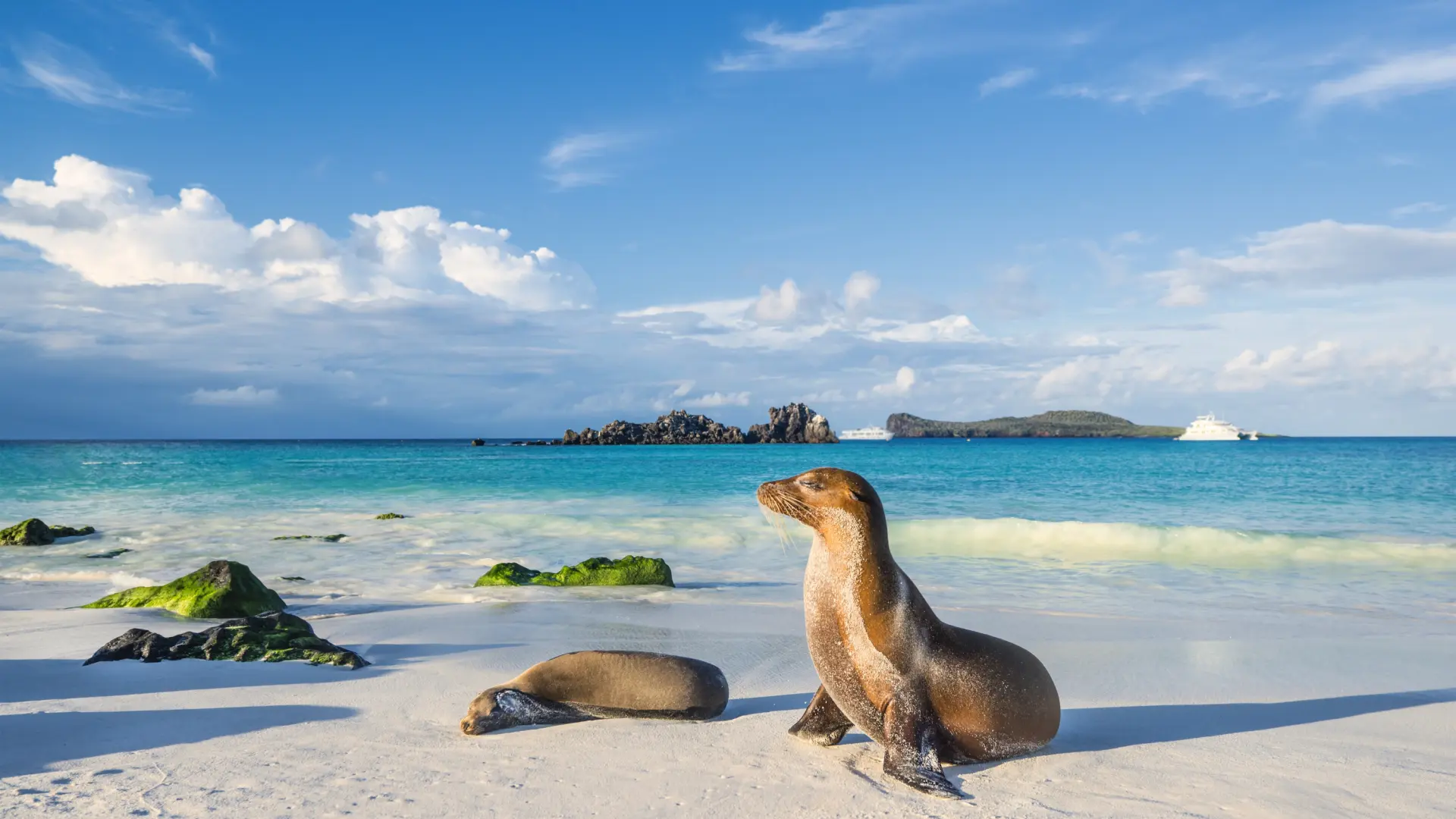
The Galápagos Archipelago stands as an unparalleled travel destination for those seeking a distinctive experience. Renowned for influencing Charles Darwin’s theory of evolution, these islands became a national park in 1959, coinciding with the 100th anniversary of the release of On the Origin of Species. As a UNESCO World Heritage site, the Galápagos promises exceptional eco-adventures and unique opportunities to witness a variety of wildlife in its natural environment.
This detailed guide will provide you with all the essential information needed to organize your dream trip to the Galápagos, including how to reach the islands and the best ways to discover them.
Where Are the Galápagos Archipelago Situated?
Located across both sides of the equator in the eastern Pacific Ocean, the Galápagos Archipelago lies approximately 965 kilometers to the west of mainland Ecuador. Known as one of the most volcanically active and youngest archipelagos on Earth, the islands cover a vast area of 52,000 square kilometers. The islands’ fascinating geological features include towering volcanoes and pristine beaches.
The Galápagos National Park, founded in 1959, protects 97% of the islands’ land area, while the Galápagos Marine Reserve, expanded in 2022, safeguards over 76,000 square miles of ocean surrounding the archipelago.
How Far Are the Galápagos from Ecuador?
The Galápagos Islands belong to Ecuador, situated about 965 kilometers away from the mainland. Their remote position kept them hidden from the world until their discovery in 1535 by Spanish nobleman Tomás de Berlanga. This isolation allowed for the development of the islands’ unique flora and fauna, which Darwin famously referred to as “a world unto itself.” With no land predators, the wildlife here is notably tame, making it easy for visitors to walk among iconic species like marine iguanas, giant tortoises, and blue-footed boobies.
How to Reach the Galápagos Islands
Reaching the Galápagos requires two stages: first, a flight to Ecuador’s mainland, followed by a connecting flight to the islands. Flights to the Galápagos are regularly available from Ecuador’s two main international airports, in Quito and Guayaquil.
Quito and Guayaquil: Best Departure Points
Both cities provide essential flights to the Galápagos and offer valuable pre- or post-trip experiences. Quito, the Ecuadorian capital, is famous for its well-preserved historic center, which is a UNESCO World Heritage site. Guayaquil, Ecuador’s dynamic port city, is ideal for relaxing before your island adventure.
Flights to the Galápagos Islands are available from both cities, but it’s recommended to stay at least one night in either Quito or Guayaquil prior to your trip. Flights typically depart in the morning, so be sure to plan accordingly.
| Airport Name | City | Airport Code | Flight Time to the Galápagos |
|---|---|---|---|
| Mariscal Sucre International Airport | Quito | UIO | 2 hours 10 minutes |
| José Joaquín de Olmedo International Airport | Guayaquil | GYE | 1 hour 55 minutes |
Flying to the Galápagos from Quito
From Quito, travelers can fly directly to the Galápagos Islands, or with a brief stop in Guayaquil. Once you arrive at the islands, you can choose to explore on your own or join an organized tour.
Option 1: Direct Flights to the Galápagos
Direct flights from Quito’s Mariscal Sucre International Airport (UIO) offer a convenient route to the islands. Some flights may have a short layover in Guayaquil’s José Joaquín de Olmedo International Airport (GYE) before proceeding to the Galápagos.
Option 2: Taking a Galápagos Cruise
For a more structured adventure, you may opt for a Galápagos cruise. These small ships provide an excellent way to explore the islands, with daily excursions on land and sea, guided by expert naturalists.
Several cruise companies arrange flights for their guests from the mainland, ensuring everyone arrives in time for embarkation. If you’re traveling with certain cruise lines, you may also have the option to extend your trip to explore more of Ecuador or even visit Peru, home to UNESCO World Heritage sites like Machu Picchu and the Sacred Valley.
Arriving at the Galápagos Islands
The main airports on the Galápagos Islands are located on Baltra Island (Seymour Airport) and San Cristóbal Island (San Cristóbal Airport). These airports serve as the sole entry points from Ecuador’s mainland.
Galápagos Airport Codes
| Airport Name | Island | Airport Code |
|---|---|---|
| Seymour Airport | Baltra | GPS |
| San Cristóbal Airport | San Cristóbal | SCY |
Should You Fly on the Same Day as Your Cruise?
It is advisable to fly to the Galápagos on the same day as your cruise departure. The flight is only about two hours, so coordinating the flight with your cruise departure minimizes travel stress.
If you’re booking independently, make sure to check flight schedules and ensure that your flight aligns with the cruise departure time. Many cruise companies will help coordinate flight arrivals to ensure a smooth connection.
Exploring the Galápagos by Cruise
A cruise is one of the most enjoyable ways to experience the Galápagos Islands. With knowledgeable naturalists on board, you’ll have the chance to visit pristine sites and engage in activities such as snorkeling with sea lions, hiking volcanoes, and discovering the islands’ unique wildlife.
Advantages of a Galápagos Cruise
- Access to a variety of islands and natural sites
- Opportunities for both land and marine activities
- Experienced guides and naturalists to enrich your experience
- Convenient travel with pre-arranged flights, transfers, and accommodations
- Commitment to sustainability and responsible tourism
Whether on a luxury expedition or a smaller intimate cruise, a Galápagos cruise offers an exceptional opportunity to witness the wonders of this unique archipelago.
Important Travel Details for the Galápagos Islands
A few important tips will help ensure a smooth trip to the Galápagos.
Luggage Limitations
Be aware that baggage limits for flights from Ecuador to the Galápagos are stricter than domestic flights. Passengers can bring one checked bag up to 23 kg, with hand luggage restricted to 10 kg.
Biosecurity Regulations
To protect the fragile ecosystem of the Galápagos, all luggage is inspected by the Galápagos Biosecurity Agency upon arrival. Items like fruits, vegetables, and organic materials (such as seeds or plants) are not permitted to avoid introducing invasive species.
Entry Fees
Non-Ecuadorian visitors are required to pay a National Park entry fee upon arrival. The fee is $100 for adults and $50 for children. This fee supports the conservation efforts in the Galápagos National Park, ensuring that the islands remain preserved for future generations.
Final Thoughts
The Galápagos Islands offer a unique and unforgettable experience for travelers seeking a pristine natural environment and extraordinary wildlife. Whether traveling independently or on a guided cruise, you’ll be immersed in the natural beauty of this world-renowned destination while contributing to its conservation efforts.
From stunning landscapes to unparalleled biodiversity, the Galápagos is a place where every moment is remarkable. Plan your journey carefully, and prepare for the adventure of a lifetime!