Corpus Christi in Cusco is an extraordinary celebration that beautifully blends the Indigenous Andean spirituality with Catholic practices. Every June, the city of Cusco becomes a lively spectacle, filled with colorful processions, enchanting music, and traditional foods, attracting visitors from around the world. Whether you explore this festival independently or with the assistance of a trustworthy local agency like SALUXE TRAVEL, this event provides an authentic glimpse into the deep-rooted cultural legacy of Peru.
In the sections below, we delve into the festival’s historical significance, its cultural and religious importance, the saints and virgins celebrated during the occasion, and practical tips to fully immerse yourself in the spirit of Corpus Christi amidst the stunning Andes mountains.
Festival’s Historical Origins
Long before the arrival of the Spanish, the Inca Empire honored deities such as Inti, the sun god, and Pachamama, the earth goddess, through sacred rituals and community parades. These ancient ceremonies were designed to pay tribute to their ancestors and spiritual entities. When Catholicism arrived, Indigenous rituals gradually evolved, fusing Andean spirituality with Christian imagery.
In 1572, Spanish missionaries integrated native customs into Catholic festivities, replacing ancestral symbols with saints and virgins acknowledged by the Church. This blending of traditions birthed the Corpus Christi in Cusco festival, which now celebrates both Catholic devotion and Andean beliefs, symbolizing faith and cultural identity.
When and Where is the Festival Celebrated?
The event takes place every year, about nine weeks after Maundy Thursday, typically occurring in late May or early June. The celebration is centered around the Plaza de Armas and the iconic Cusco Cathedral. However, the vibrant processions also begin at nearby churches such as San Blas and San Pedro, bringing together various communities from surrounding areas, each presenting their patron saints in collective homage.
Preparations and Festive Decorations
Weeks before the festivities, devoted community members known as carguyoq carefully organize every detail, from musical performances to dressing the saints in elaborate outfits. Streets are adorned with intricate floral carpets, brilliant lighting, and colorful banners that merge Christian and Andean elements. The excitement builds as the festival draws closer.
Culinary Traditions During the Festival
No celebration in Cusco is complete without its unique food offerings, and Corpus Christi showcases some of the region’s best dishes. The festival’s signature dish is Chiri Uchu, a cold platter symbolizing fertility, abundance, and community. It typically includes:
- Cuy (guinea pig) and chicken
- Chalona (dried alpaca meat)
- Stuffed rocoto peppers
- Cochayuyo seaweed
- Toasted corn kernels and fresh cheese
- Boiled egg and local Andean sausage
Along with Chiri Uchu, visitors can enjoy other local treats like tamales and chicha de jora, available from vendors around the Plaza de Armas.
Saints and Virgins Celebrated During Corpus Christi
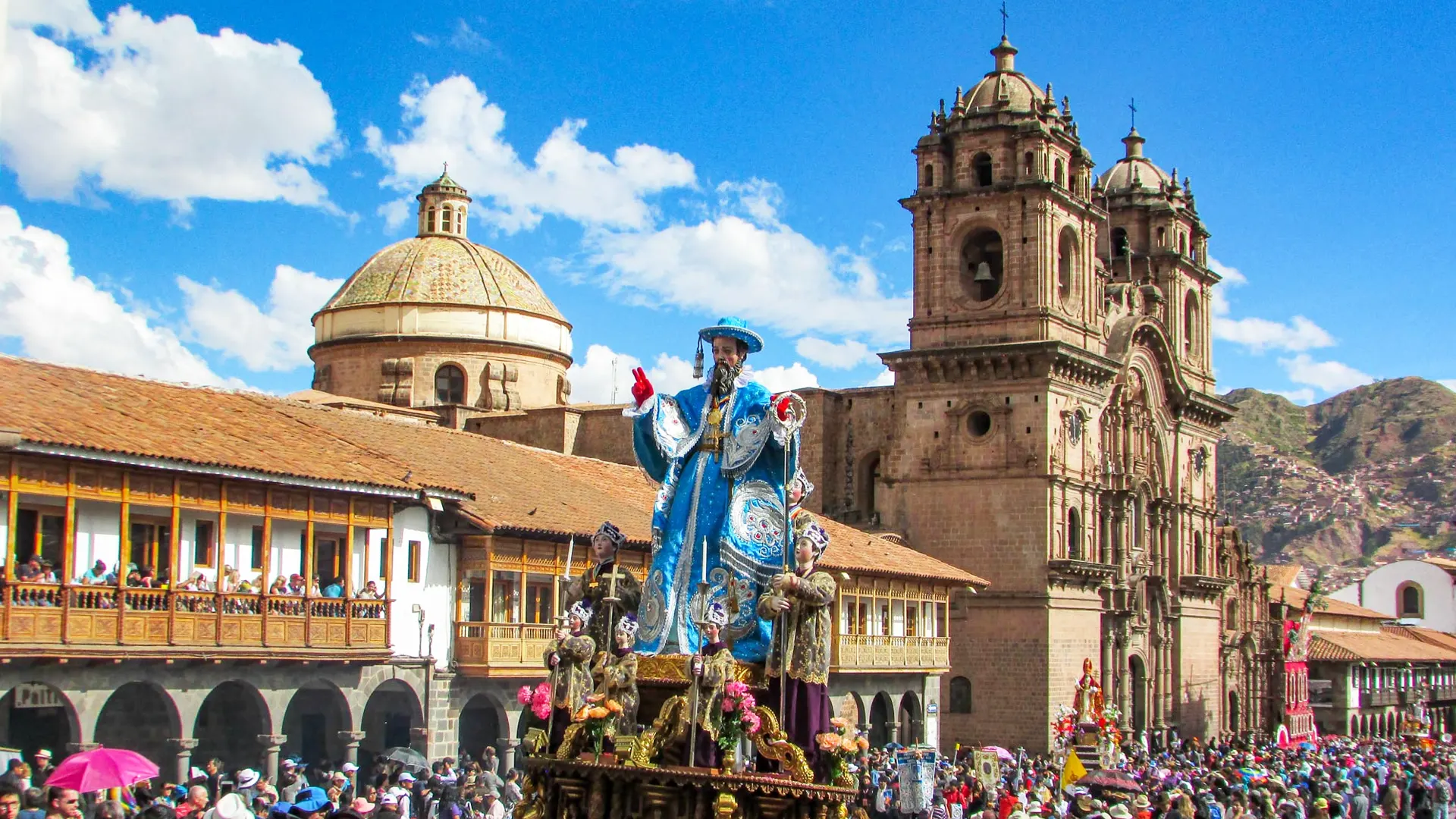
Fifteen respected religious icons are paraded through the streets on beautifully decorated floats, each accompanied by devoted followers. These figures serve a dual purpose, representing both Catholic teachings and local spiritual practices.
Table: Key Celebrated Figures
| Name | Background | Symbolic Meaning |
| San Antonio Abad | A desert monk famous for his deep spirituality and miracles. | Protector of animals and rural life |
| San Jerónimo | A biblical scholar and hermit who translated the Bible into Latin (the Vulgate). | Patron of scholars and translators |
| San Cristóbal | A legendary figure who carried Christ across a river, symbolizing safe passage. | Guardian of travelers and pilgrims |
| Santa Bárbara | A Christian martyr believed to offer protection from storms and sudden dangers. | Defender against lightning and natural disasters |
| Virgen de la Natividad | Honored as a maternal figure in the nativity of Christ. | Symbol of love, renewal, and new beginnings |
The Main Event: Processions and Festivities
The festival kicks off with a bilingual Mass at Cusco’s Cathedral. Afterward, each statue is paraded through the city streets to lively music and traditional dances. Dance groups like the Contradanza and the mysterious Ukukus bring Andean traditions to life with their colorful costumes and dynamic movements. The festivities culminate as all the saints return to the cathedral, greeted by joyous communal celebrations.
The Octava: Continuing the Celebration
Eight days after the main event, the Octava occurs, reaffirming the community’s faith with additional processions. While more intimate, this continuation is still deeply significant to locals, strengthening their connection to both historical and contemporary traditions.
Farewell Rituals: Returning the Saints
After the Octava, the saints are respectfully returned to their home parishes. In some areas, small ceremonies and special blessings are held as a final tribute to these revered figures.
Helpful Tips for an Enriching Experience
- Be respectful: Corpus Christi is a deeply spiritual occasion—dress modestly and behave respectfully during the processions.
- Ask before taking photos: Always ask permission before photographing dancers or local participants.
- Try the food: Don’t miss tasting Chiri Uchu and other traditional dishes from trusted street vendors.
- Stay hydrated: Be sure to drink water and take breaks to adjust to Cusco’s altitude.
- Prepare for crowds: The festival draws large crowds, so arrive early and wear comfortable shoes for standing and walking.
Recommended Activities
- Admire the floral carpets: See the beautiful street art created with flowers in the early hours of the day.
- Join a dance workshop: Learn the steps of traditional dances like Mestiza Qoyacha.
- Explore local churches: Visit the local parishes to admire their history and architecture.
- Connect with locals: Engage in conversations to hear personal stories and traditions.
- Visit traditional markets: The San Pedro Market offers a vibrant cultural experience with local food and crafts.
Beyond the Festival: Explore Cusco and the Surrounding Area
Extend your stay in Cusco to explore more of its amazing sites:
- Sacsayhuamán: An incredible Inca fortress with massive stone walls overlooking the city.
- Nearby archaeological sites: Discover Q’enqo, Tambomachay, and Puka Pukara to deepen your knowledge of Inca history.
- Sacred Valley: Explore picturesque towns and stunning ancient ruins in this lush valley.
- Machu Picchu: Visit the world-renowned Inca citadel, a must-see landmark just a few hours away.
Corpus Christi in Cusco is more than just a festival; it’s a vibrant celebration of cultural endurance, spiritual devotion, and communal unity. For those looking for an authentic and transformative experience, this event offers a deep dive into the heart of Andean traditions. Be sure to include it in your travel plans and discover the sacred essence of the Andes with SALUXE TRAVEL.